A spirit level is a professional precision instrument designed to measure the horizontality, verticality, and angular inclination of a surface. From large-scale construction sites to routine domestic maintenance, this spirit level tool serves as an indispensable reference for ensuring structural accuracy.
But how does such a simple tool actually work, and why is getting it right so important?
How a Spirit Level Works And Why It Matters
1. The Core Principle
The key component of a spirit level is the vial, a sealed transparent tube filled with a low-viscosity liquid, typically ethanol, with a small air bubble trapped inside.
According to the principles of physics, a liquid at rest will always settle into a gravitational equipotential surface, which is by definition perfectly horizontal. Because the air bubble is significantly less dense than the surrounding liquid, buoyancy forces it to migrate toward the highest point of the curved vial.
2. Importance of Precision Spirit Level
Gravity provides the only absolute reference system in physical space.
The human eye is highly susceptible to visual illusions caused by surrounding reference points. A slanted ceiling or uneven floor can make a perfectly level surface appear tilted, and vice versa.
Without quantified measurement using a precision spirit level, even minor deviations will compound over distance, ultimately leading to structural instability, functional failure, or severe visual inconsistency.
Professional Construction Applications
In the construction industry, a spirit level is a fundamental tool for ensuring structural integrity and building quality. The spirit level applications span every stage of a project, from groundwork to finishing.
1. Masonry (Bricklaying and Wall Construction)
During bricklaying, the plumb of the wall must be continuously monitored. If a wall leans to one side, the center of gravity shifts outside the structural base, reducing load-bearing capacity and, in severe cases, risking collapse.
2. Door and Window Frame Installation
If the frame is out of plumb, the door or sash will swing open or closed under its own weight, seals will not seat correctly, acoustic performance will be compromised, and hardware such as latches and locks will fail to align.
3. Floor Preparation and Laying
Before laying flooring, the subfloor must be inspected for flatness. Large-format tiles require extreme precision; even slight irregularities can cause "lippage" at the edges or uneven load distribution, leading to hollow spots.
4. Plumbing and Drainage
Drainage pipes are rarely installed perfectly horizontal; they require a precise gradient (typically 1% to 3% for indoor lateral pipes, depending on diameter and local codes). Levels with pitch markings ensure that fluids flow via gravity, preventing stagnation or backflow.
5. Steel Structures & Suspended Ceilings
The plumb of vertical columns directly affects the overall load-bearing capacity. During suspended ceiling construction, using a spirit level to establish a horizontal reference line is key to ensuring a visually flat ceiling across large areas without sagging or deformation.
6. Patio and Paving Installation
Outdoor terraces must incorporate a calculated drainage slope. A spirit level used in conjunction with a straight edge allows for precise control over the gradient, directing rainwater toward drainage points to prevent substrate damage from ponding.
7. Site Grading
Prior to pouring concrete paths or erecting greenhouses, large-scale leveling is required to ensure even load distribution and prevent structural cracking caused by differential settlement.
Home Improvement and DIY Applications
For non-professional users, a spirit level is a vital tool for improving domestic functionality and resolving common household issues.
1. Fixture and Decor Installation
Wall-mounted items such as artwork, mirrors, and clocks are highly sensitive to horizontal alignment. Using a level compensates for misleading visual lines caused by sloped ceilings or floors, ensuring all items remain on a consistent axis.
2. Shelving and Racking
If a wall shelf is not level, cylindrical or liquid objects may roll or spill. Prolonged tilting also causes uneven stress on brackets, potentially loosening the wall anchors.
3. Television Wall Mount
The alignment of a television screen directly affects viewing ergonomics. A tilted installation shifts the visual center of gravity, causing strain and visual fatigue over time.
4. Cabinetry and Countertops
Kitchen installation relies heavily on leveling. An unlevel countertop causes liquids to pool, leads to uneven heat distribution in cookware, and may cause drawers to slide open due to gravity.
5. Furniture Assembly
When assembling large modular furniture, verifying that the structure is square ensures that doors align correctly and the unit remains stable without wobbling.
Deli Spirit Levels
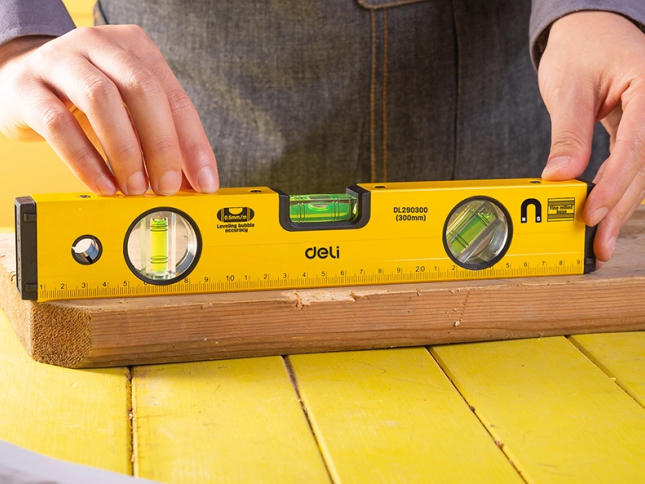
To achieve these accurate results, whether on a job site or in your living room, you need a tool that balances precision with durability. This is where Deli Tools’ specialized range comes in. Here are two options:
EDL290300 Spirit Level: DIY and Home Tasks
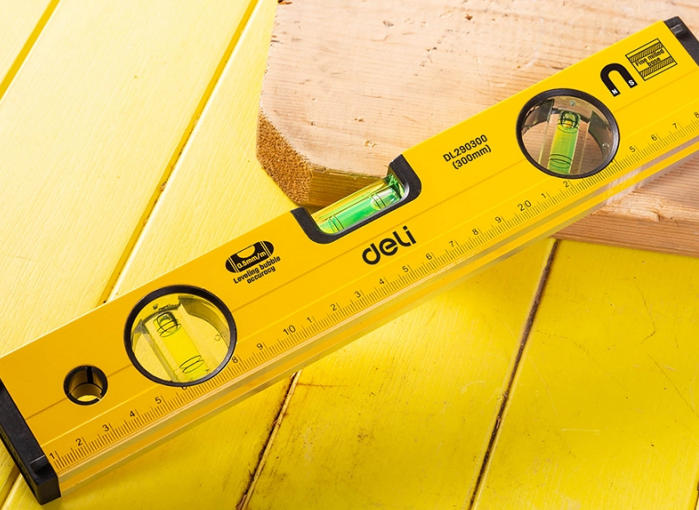
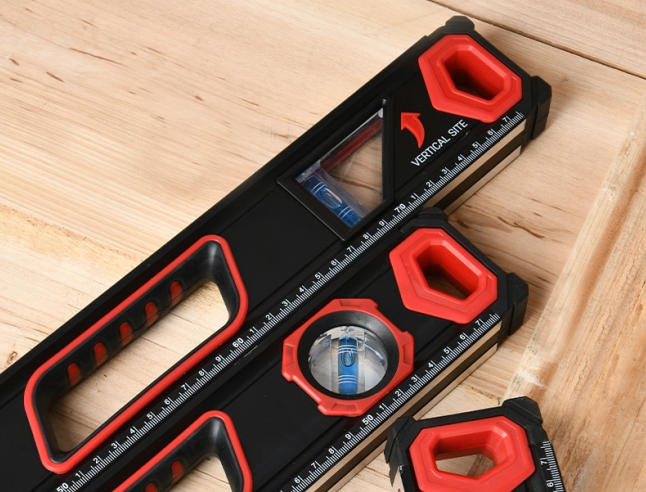
The EDL290300 is a compact 300mm tool featuring 3-in-1 functionality (horizontal, vertical, and 45° measurements) with an accuracy of 0.5mm/m. This precision is ideal for common construction and DIY tasks.
Its CNC-milled body provides a flat, reliable contact surface, while reinforced end caps enhance impact and shock resistance.
Whether hanging pictures or installing shelves, this lightweight model ensures a precise measuring experience even in tight spaces.
EDL290400K Spirit Level: Professional Applications
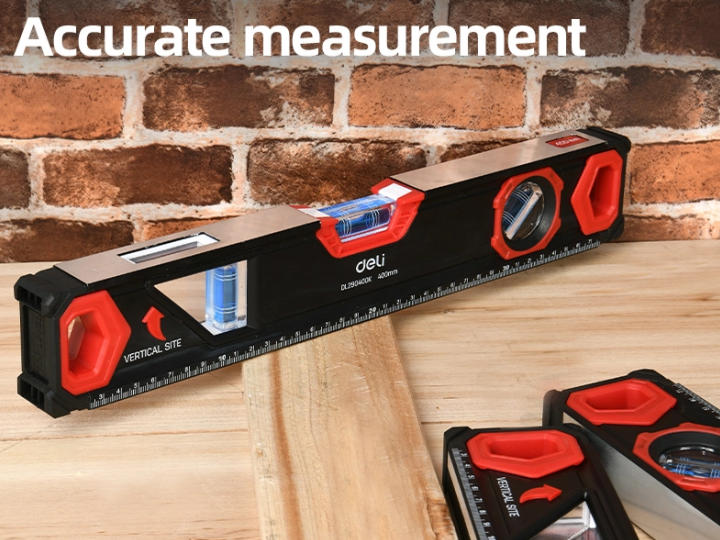
The 400mm EDL290400K maintains 0.5mm/m accuracy across horizontal, vertical, and 45° measurements.
Its double-milled surface allows both faces to serve as reference planes, effectively preventing errors caused by single-side wear. With a 1.5mm wall thickness, the frame resists bending or warping under heavy job-site use.
A built-in sight window allows direct lateral readings, providing a distinct advantage in confined spaces or at heights.
Conclusion
Whether you're building a wall or hanging a shelf, precision starts with the right tool. Deli Tools' spirit levels deliver professional-grade accuracy in compact, durable designs. Pick the 300mm for home use, or the 400mm for the job site.

 EN
EN
 jp
jp  ko
ko  fr
fr  de
de  es
es  it
it  ru
ru  pt
pt  ar
ar  vi
vi  th
th  hi
hi  pl
pl  id
id  el
el